Personal Project: Recreating real-world location.
Sumary
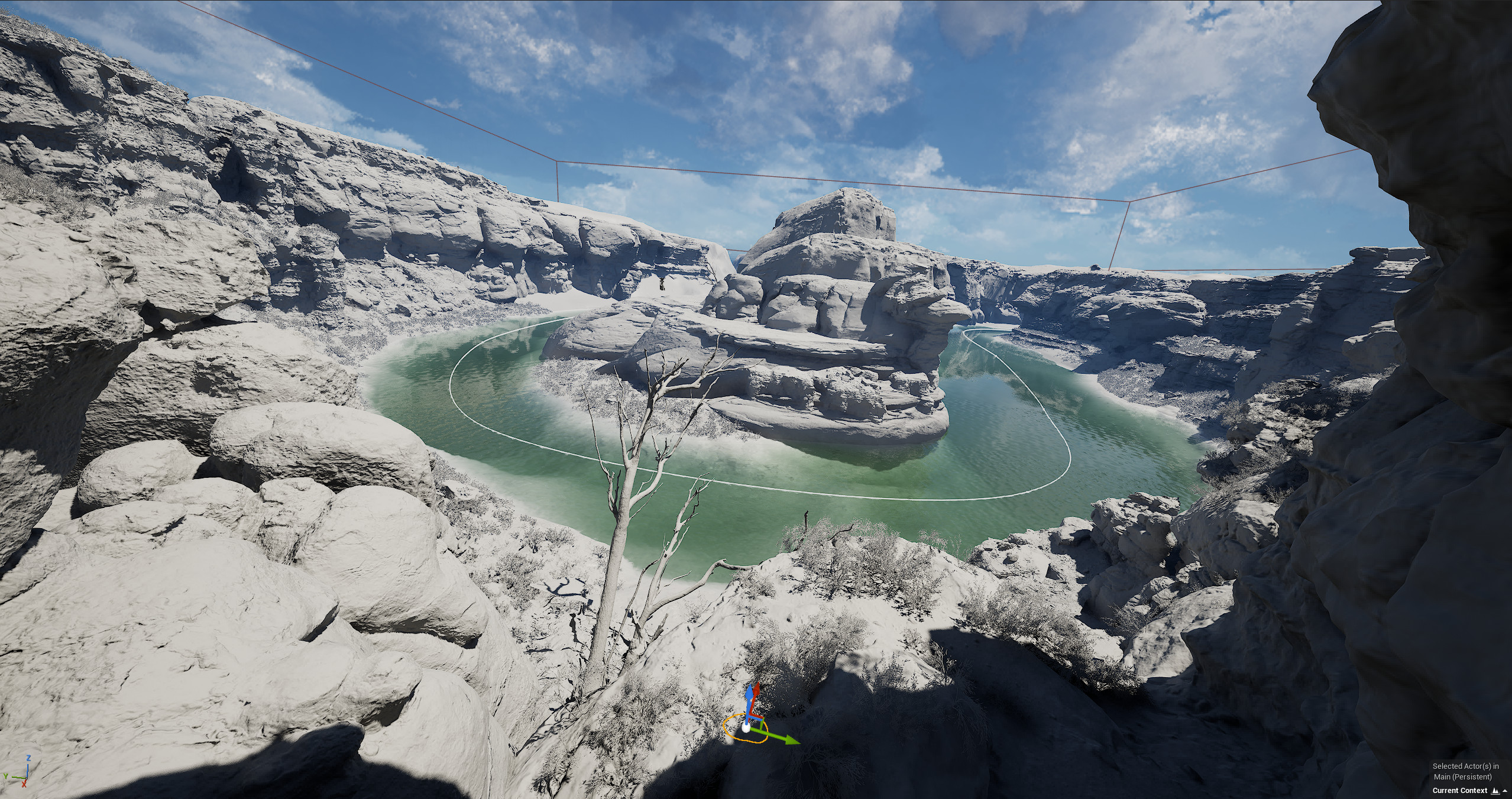
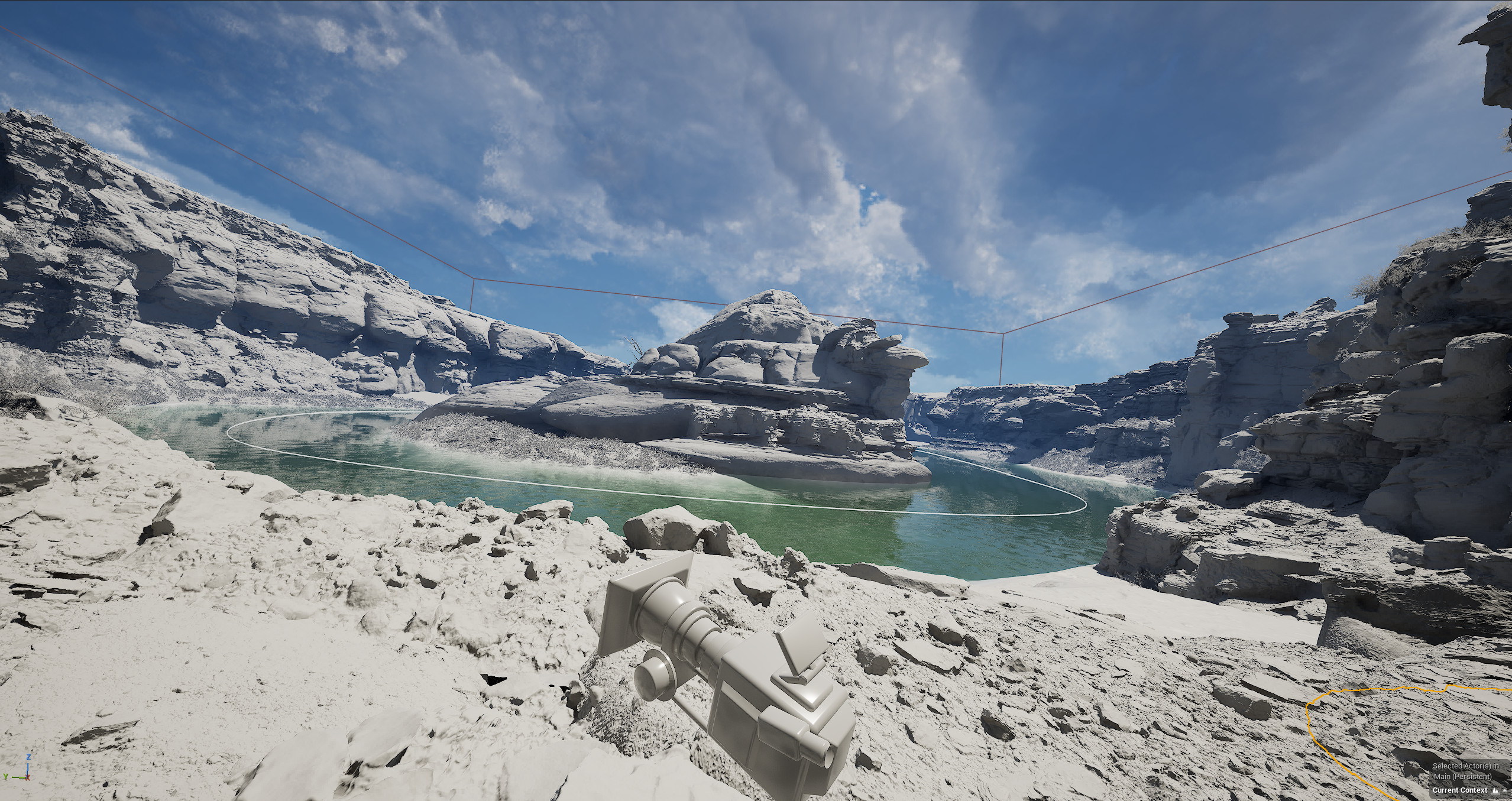
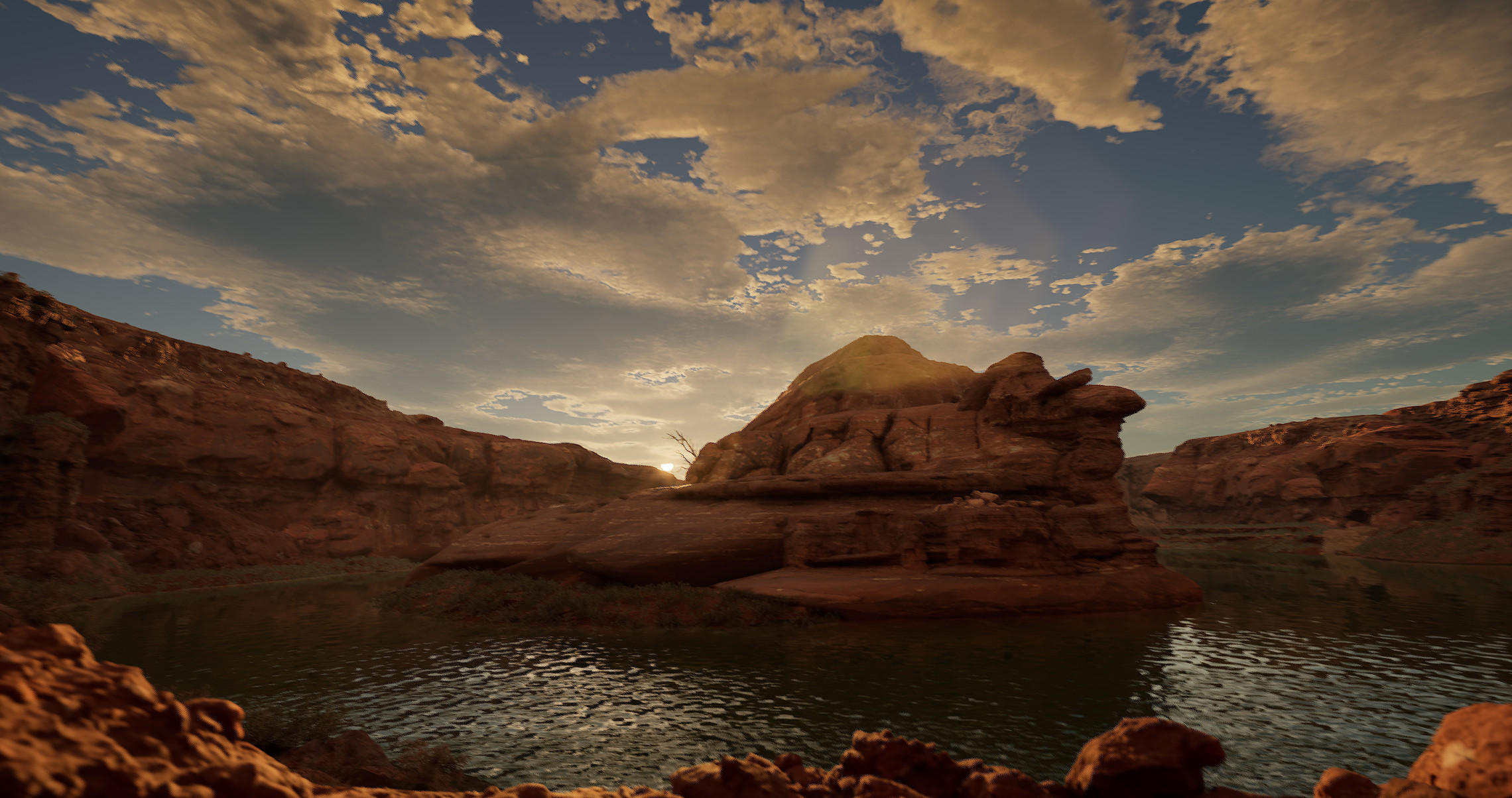
In this project, I recreated the Horseshoe Bend landscape in Arizona using Unreal Engine 5 as a study in real-time environment building. The scene was developed using real-world heightmaps, Quixel Megascans, and UE5’s Procedural Content Generation (PCG) framework to scatter rocks and vegetation. The Colorado River was simulated using the Water plugin with custom material tweaks.
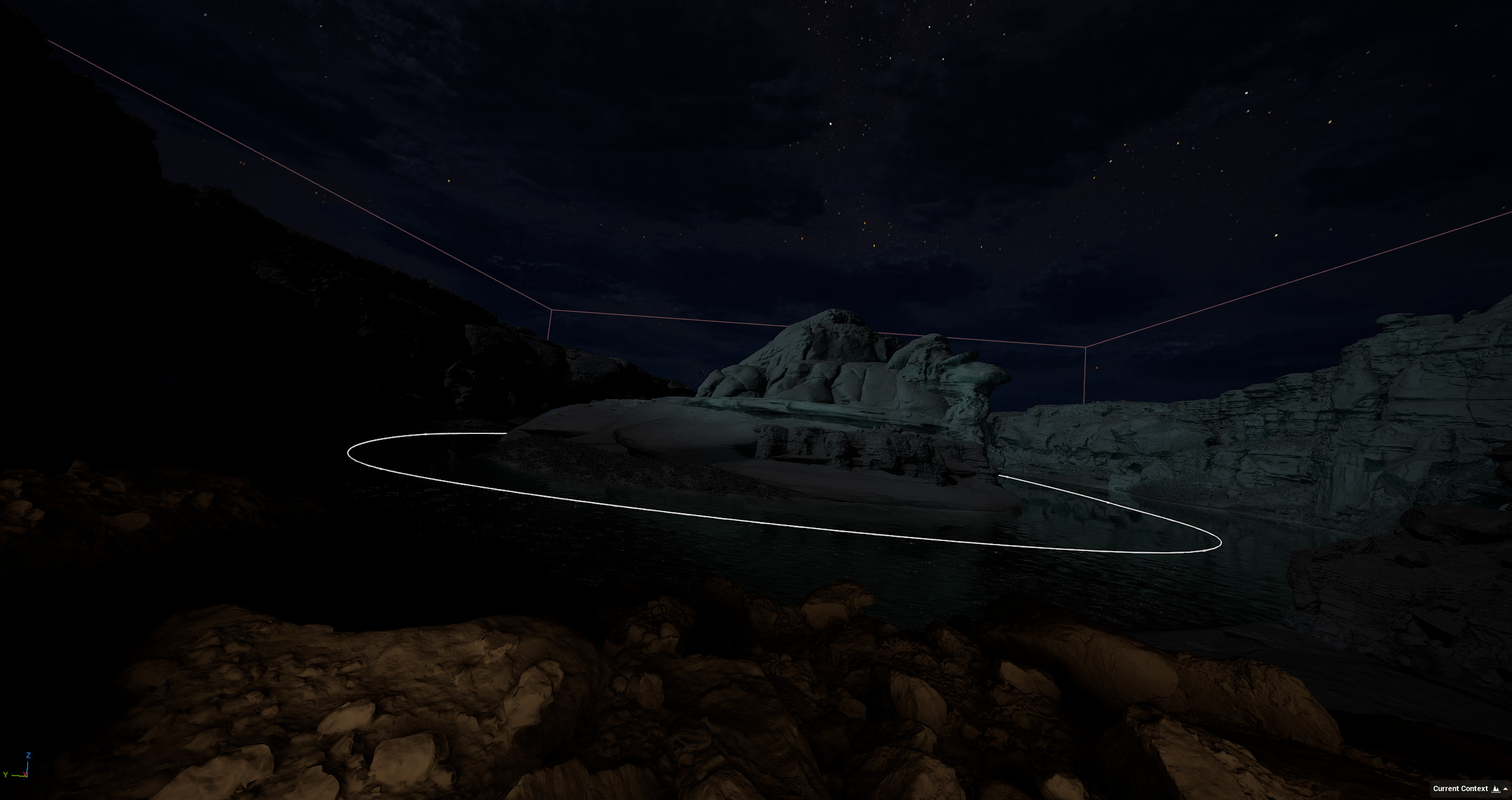
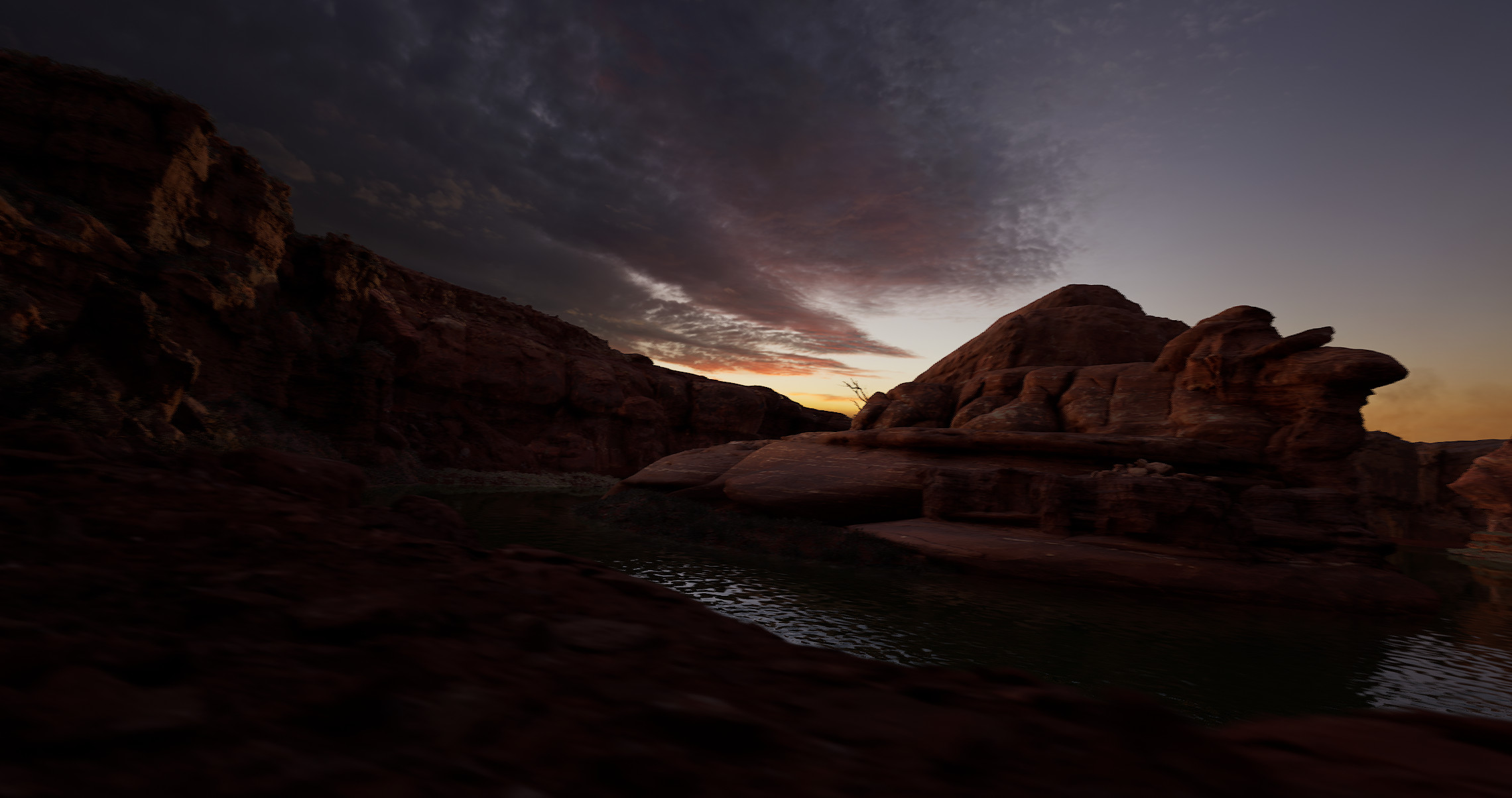
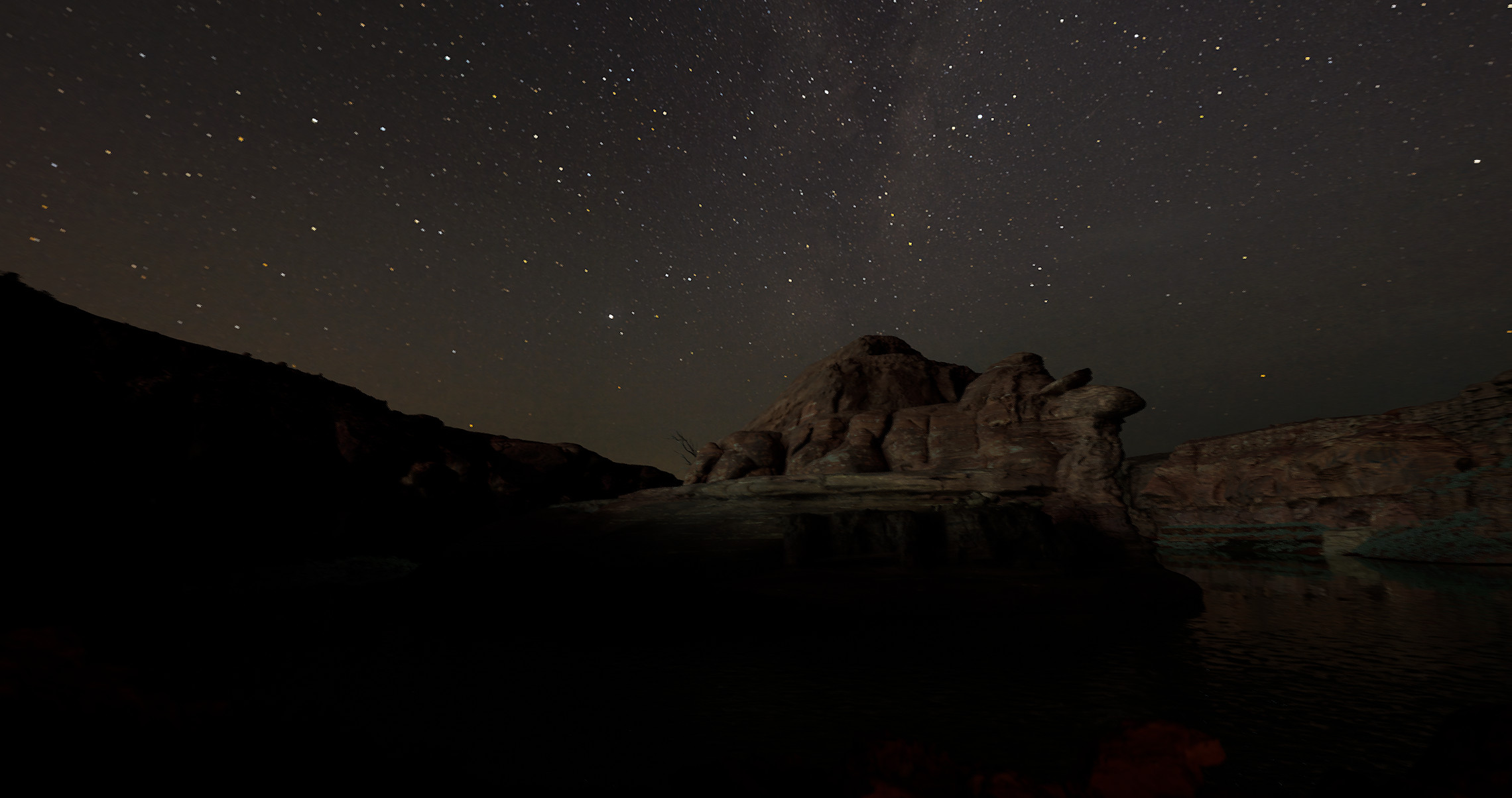
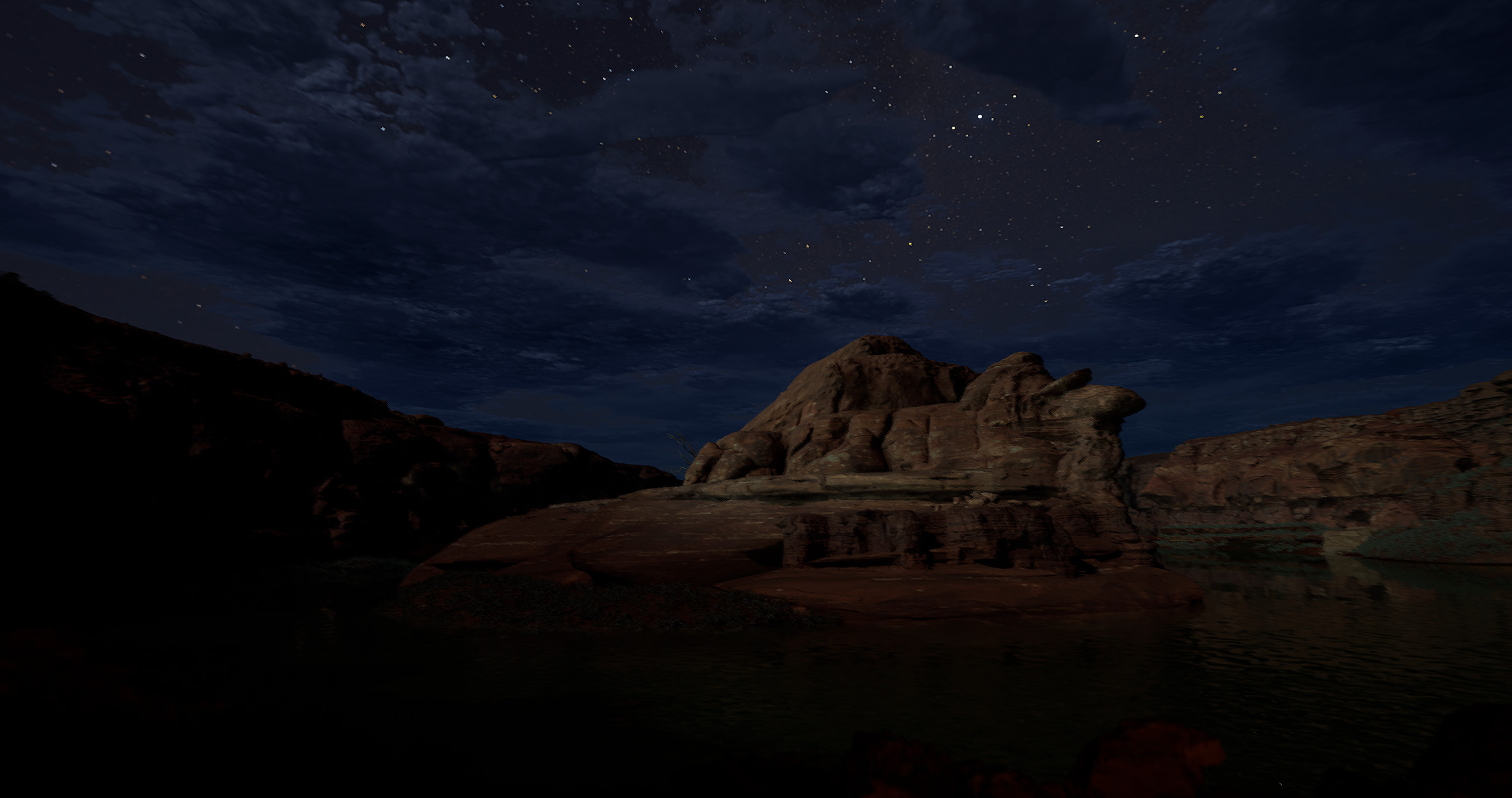
Lighting was a key focus for me, I tested both Environment Light Mixer and HDRI-based setups, alongside dusk and night variations. I used CineCameraActor with a 30mm lens and 70mm film back to achieve cinematic framing. Niagara particles were added to test motion blur and atmospheric effects in low light.
Final renders were done using UE5’s Movie Render Queue, and basic sound design was completed in DaVinci Resolve. This project helped build my foundational skills in procedural environment workflows, lighting, cinematic tools, and real-time rendering in Unreal Engine 5.
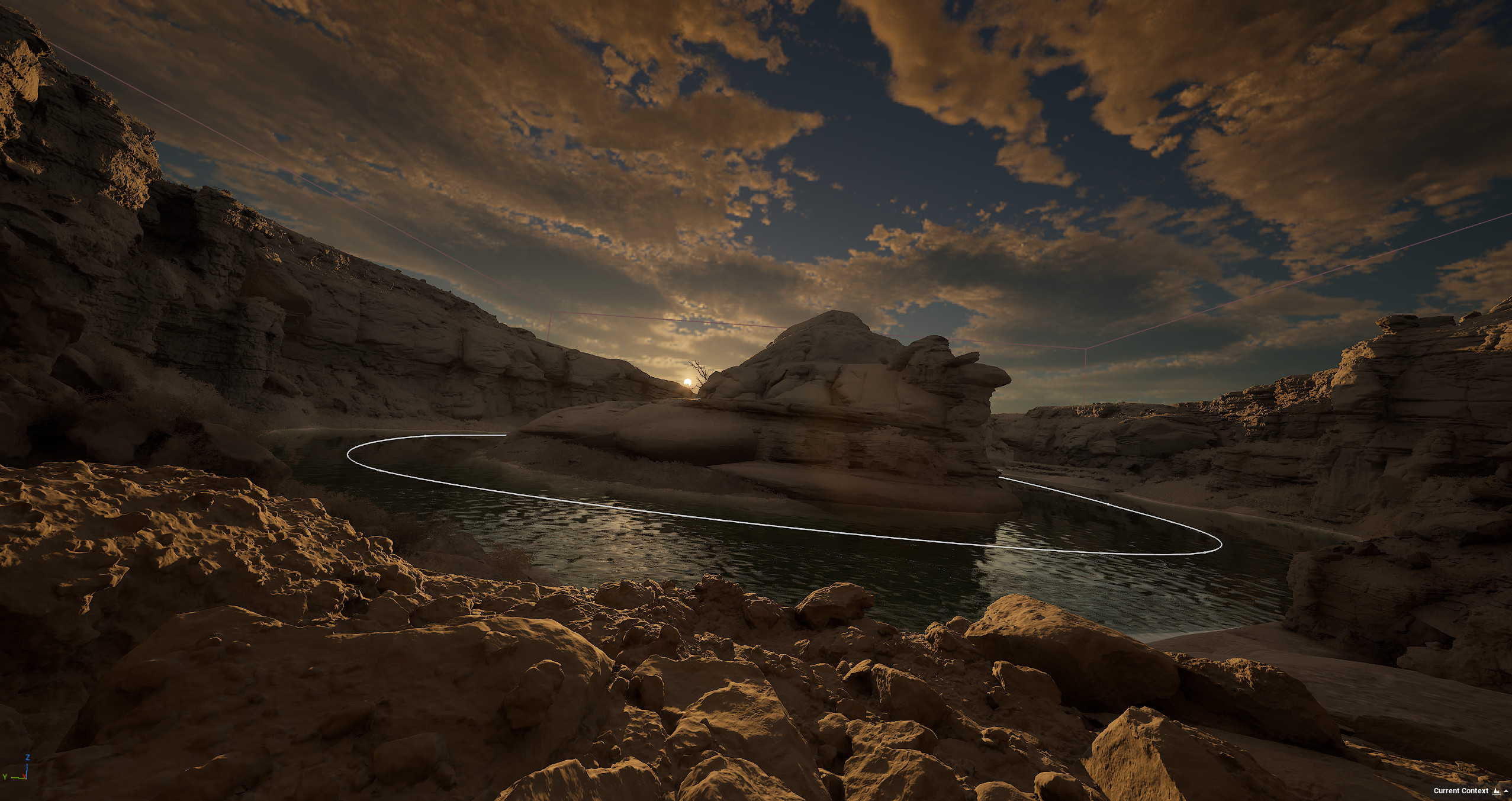
Dusk
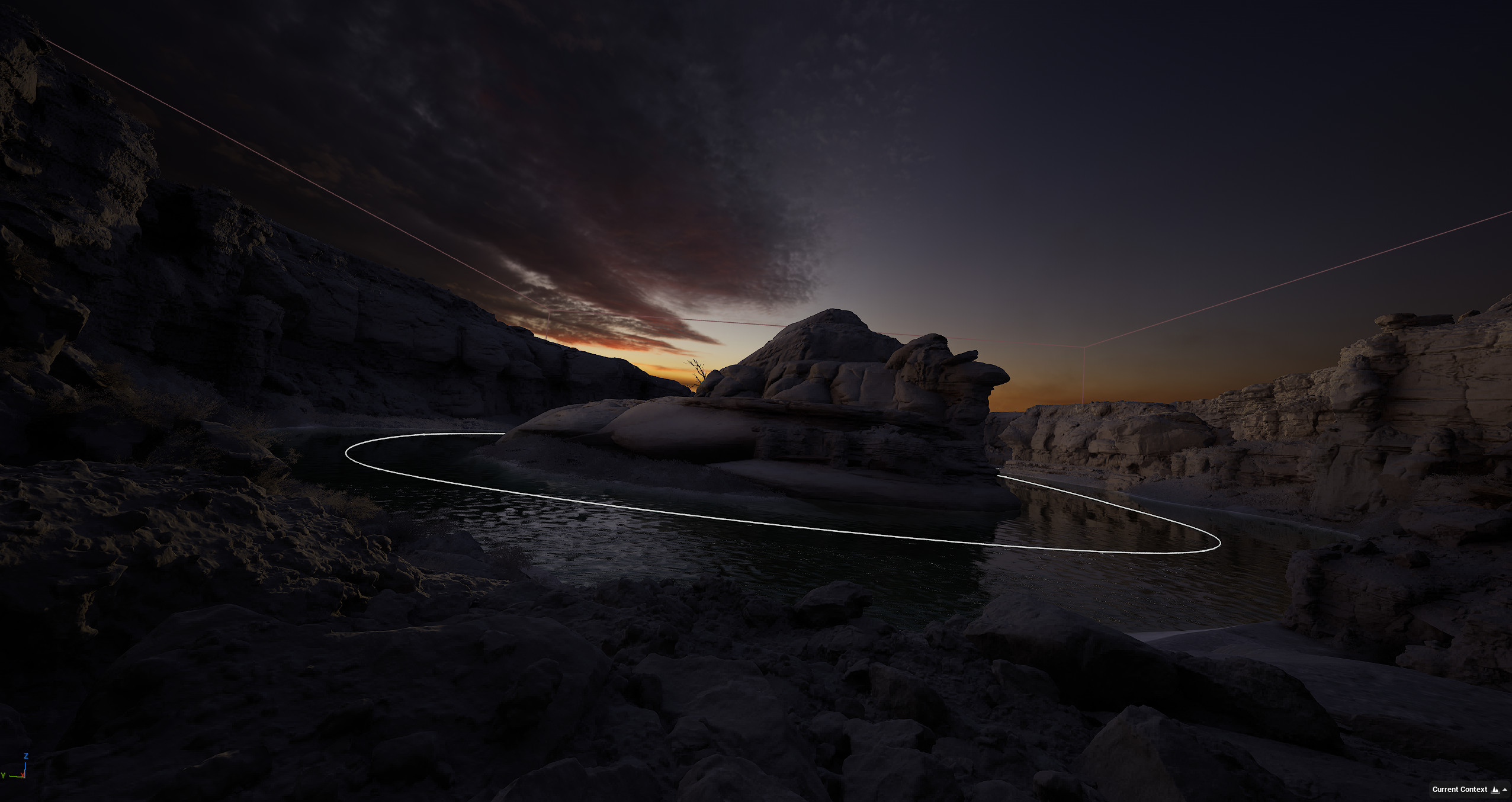
Night
Technical Notes
Environment Setup:
I began with a collection of photographic references, both from my 2018 trip to the Grand Canyon and various online sources to ensure geographic scale accuracy and lighting conditions. The base terrain was generated by using publicly available heightmaps and UE landscape. I combined this with Quixel Megascans assets for rock formations and cliff surfaces. Then I used Procedural Content Generation (PCG) system for scattering rocks, shrubs, and other vegetation across static meshes, providing a non-destructive and flexible iteration workflow. The last step was to use the Water plugin to simulate the flow and scale of the Colorado River, I did some material adjustments for refractive distortion and reflectivity.
Lighting and Atmosphere:
I tested two lighting workflows, the first one using the Environment Light Mixer for more dynamic lighting control (Directional Light, Sky Atmosphere, Exponential Height Fog, Skylight), and for the second one using just an HDRI + Sky Atmosphere + Volumetric Clouds setup. I explored both dusk and nighttime setups. These required fine-tuning of exposure controls via PostProcessVolume, including lens flares, bloom thresholds, and filmic tonemapping. I used a basic Niagara particle systems to simulate dust and airborne particles to test motion blur behavior during night scenes.
Camera and Rendering:
I used 30mm lenses on a 70mm film back to create wide establishing shots with cinematic aspect ratio of 2.39:1. Final output was rendered directly in UE5 using the Movie Render Queue with high-quality anti-aliasing and post-processing settings. Davinci Resolve was used for minor audio design and final edits. I layered ambient environmental sounds to match the lighting scenarios.Project information
- Category Environments, Lighting
- Software Unreal Engine 5
- Project date October, 2025
- References URL Night Skies Horseshoe Bend Arizona